
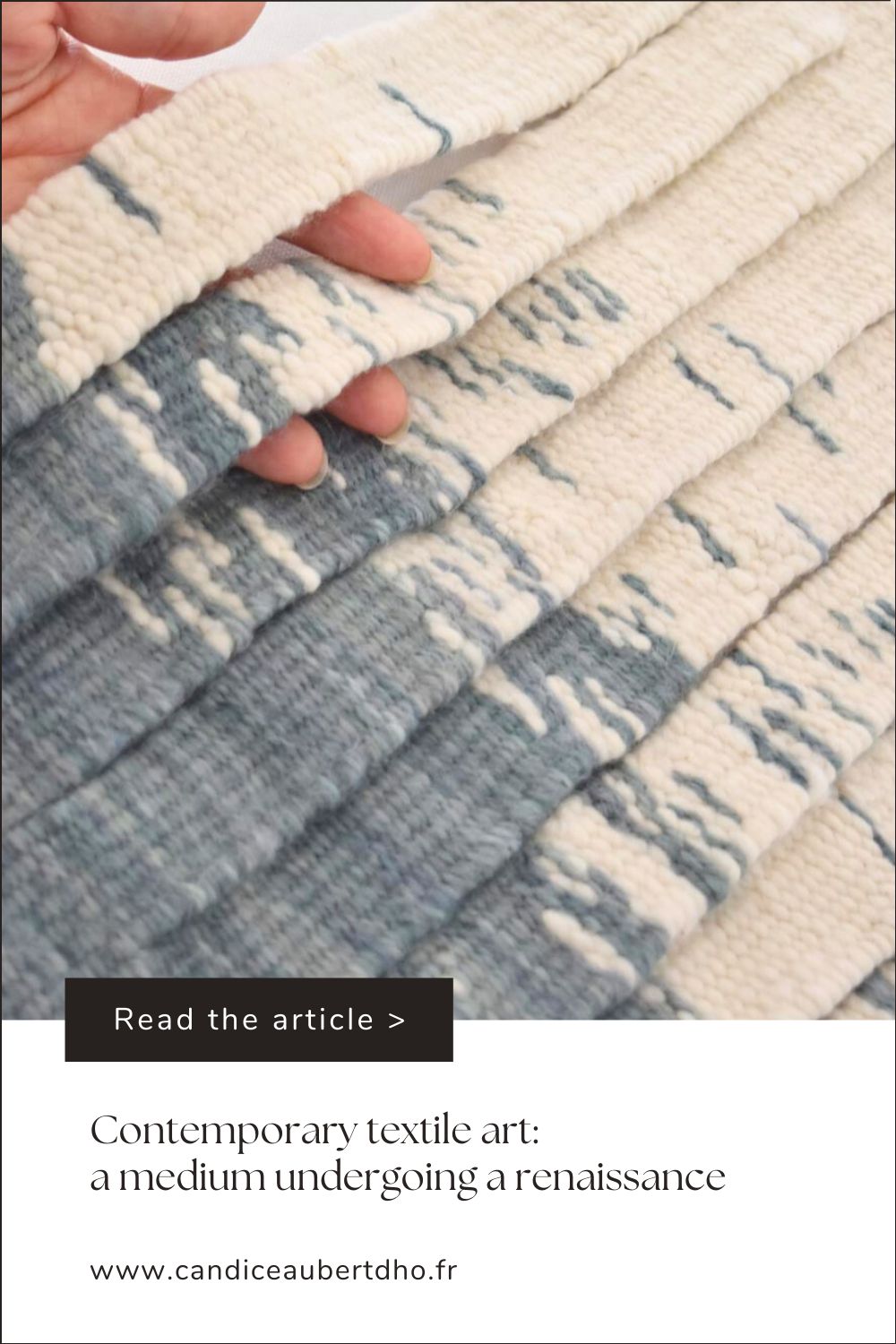
Contemporary textile art: history, artists and new trends in interior design
In recent years, contemporary textile art has undergone a real revival. Long considered a decorative or craft art, it is now making its mark in galleries, museums and interior design projects. Tapestries are now one of the must-have trends. Isn’t that ironic, when we know that they are not ‘trendy’ at all, but are part of a creative tradition that dates back to prehistoric times?
In a world marked by the standardisation of objects and materials, textile art reminds us of a deeply human dimension: that of gesture, material and time. In short, it is the embodiment of craftsmanship.
Interior designers, gallery owners and collectors are rediscovering the expressive power of wool, linen and plant fibres.
Contemporary textile art appeals to art and architecture professionals who see beyond the simple trend, which has been taken up by meaningless standardisation.
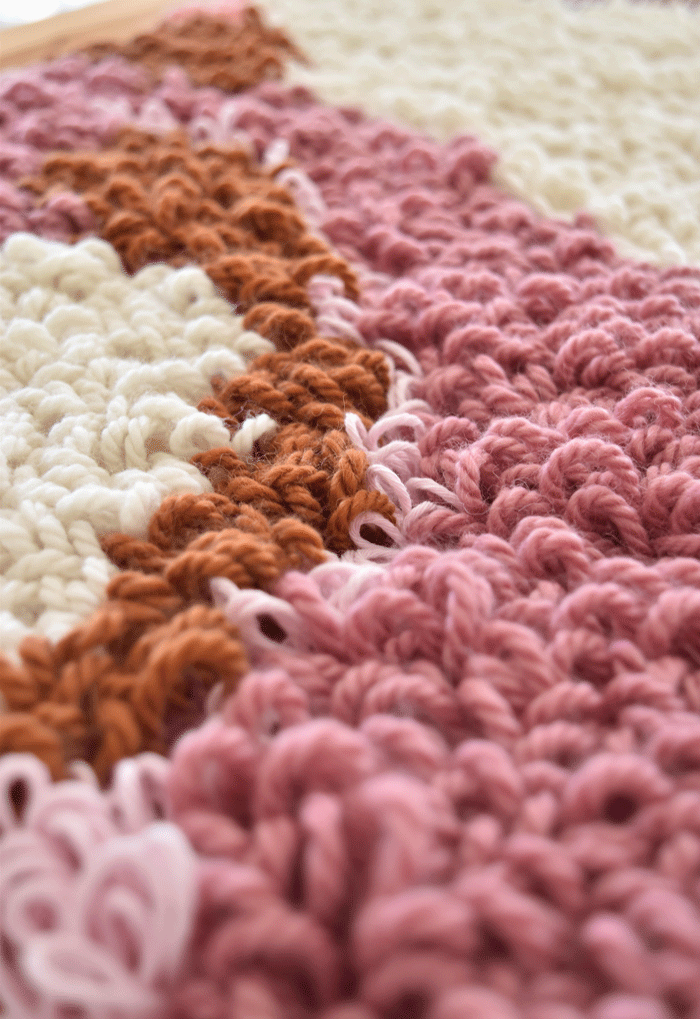
Contemporary textile art: a medium undergoing a renaissance
A long history between craftsmanship and art
The history of art and the history of textiles have been intertwined since ancient times. Long before the advent of easel painting, fibres were already being used to tell stories, decorate palaces and pass on skills. Fibres such as linen and wool were among the first raw materials available to craftsmen in prehistoric and ancient times.
Medieval European tapestries are a prime example of this. These monumental works combined storytelling, technical virtuosity and symbolic richness. The Lady and the Unicorn tapestry (16th century) and the Bayeux Tapestry are good examples of this. The latter, also known as the Queen Matilda Tapestry (11th century), is a needlepoint embroidery depicting – and recounting! – the battles for the succession to the English throne. A major work that has stood the test of time, it has been listed in UNESCO’s Memory of the World Register since 2007. However, with the advent of modernity and the academic hierarchy of the arts, textiles were gradually relegated to the status of a minor art form.
For a long time, textile practices were associated with the domestic sphere and women’s work. This marginalisation and the misogyny of 19th-century France partly explain why many textile artists have been overlooked in art history.
Today, this perception is changing, revealing high-quality artistic works.

The rediscovery of gesture and material
The revival of textile art is part of a broader movement to rediscover craftsmanship and manual labour.
Faced with industrial production, standardisation, ultra-consumption and ubiquitous digital images – not to mention the rapid development of AI – artists and collectors are seeking works that can convey a real sensory experience.
Textiles, by their very nature, perfectly meet this expectation.
Indeed, a textile work is not limited to an image: it has texture, density and volume. More than that: it has a presence. The fibres capture light, create shadows and invite the eye to come closer; every detail is an opportunity to surprise the observer and inspire dreams.
Wool, for example, has unique qualities:
- A living material
- Natural relief
- Visual warmth
- Light absorption
- A tactile and organic dimension
Hand-worked, felted, twisted, braided, knotted: it becomes a sculptural material capable of creating shapes and volumes that invite us to rethink our place in space.
Why textile art appeals to interior designers
The growing interest of interior designers in textile art is no coincidence.
In contemporary architecture, spaces are often dominated by mineral or industrial materials: concrete, glass, steel. These surfaces create visually clean but sometimes cold environments. This ‘all concrete’ trend, sometimes associated with very clean and ‘monochrome’ decorations, had its heyday from 1980 to 2020.
Textile works introduce a complementary dimension:
- Comfort
- Texture
- Visual depth
- Acoustic comfort
- Colour!
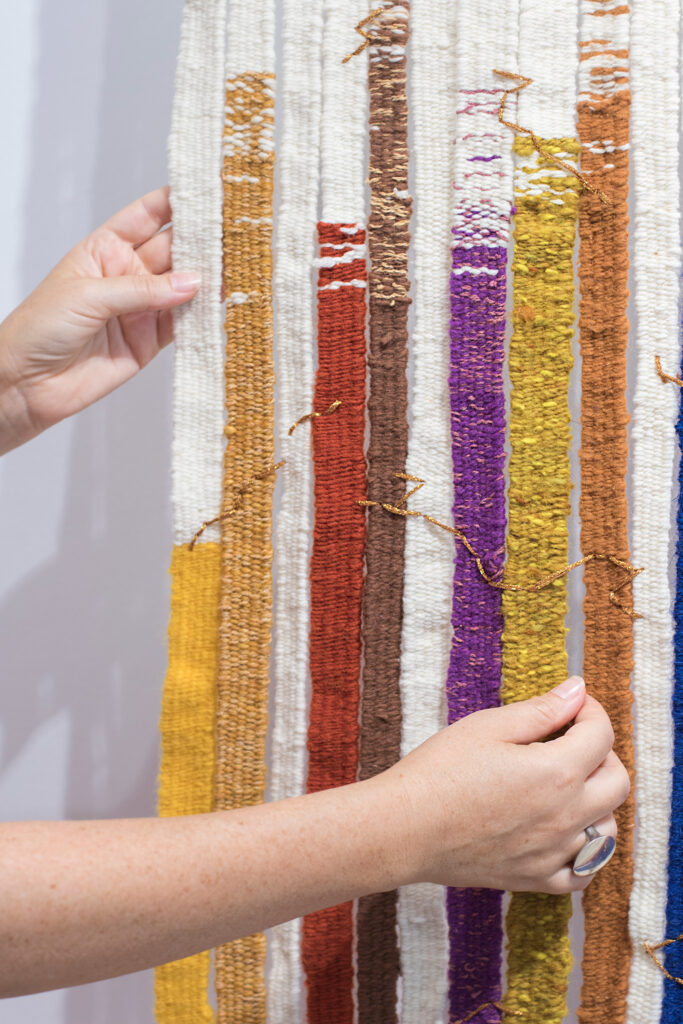
Natural colours are beautiful and soothing, while wall hangings allow for all kinds of decorative extravagance. A wall hanging, for example, can completely transform the perception of a room. It attracts the eye, structures the space and creates a more intimate atmosphere.
Architects also appreciate the opportunity to work on a bespoke basis with textile artists. A piece can be designed specifically for a location, in dialogue with the volumes, light and materials of the project.
The role of natural materials in textile art
Natural materials play a central role in the practice of many contemporary textile artists.
Wool, linen and certain plant fibres have aesthetic as well as symbolic qualities. They contribute to a virtuous ecosystem, provided that the natural fibres used are sourced locally.
These materials evoke:
- Life
- Nature
- Slow movements
- Sustainability
- Respect for the environment
In a context where environmental concerns are becoming essential, this relationship with materials takes on a special dimension. It establishes a message, a commitment, but more simply, it can also invite us to imagine a bold space that is not afraid to confront different worlds in its interior design project.
Using natural fibres also affirms a certain worldview: that of art connected to life and the long term. To our humanity.
The textile object as contemporary sculpture
Textile art is no longer limited to wall hangings.
Let’s be bold: textile art is no longer limited to wall hangings!
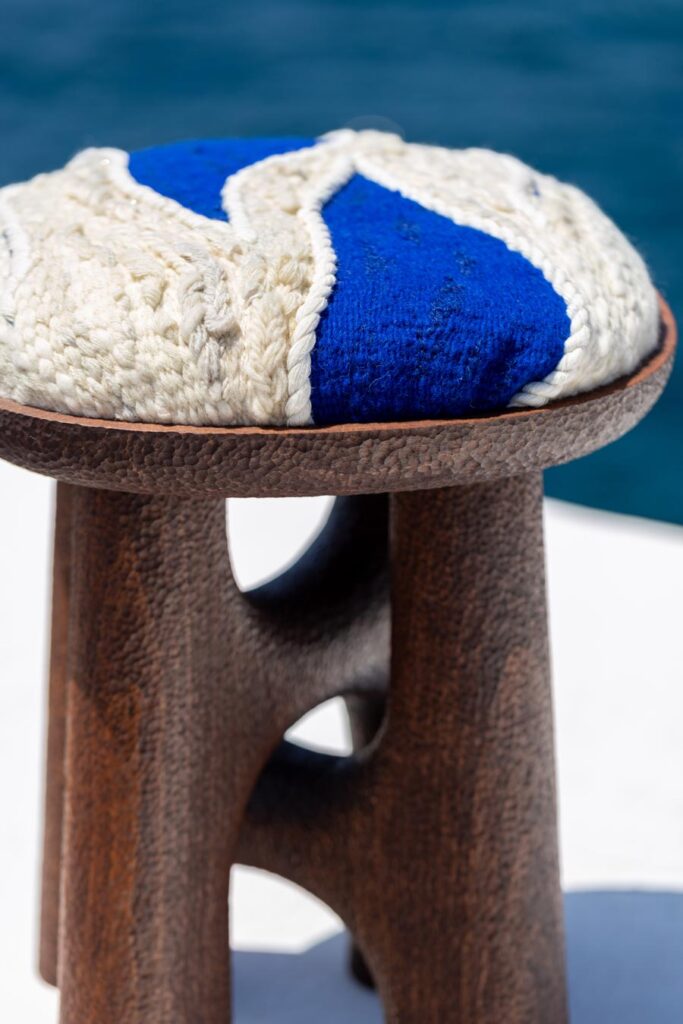
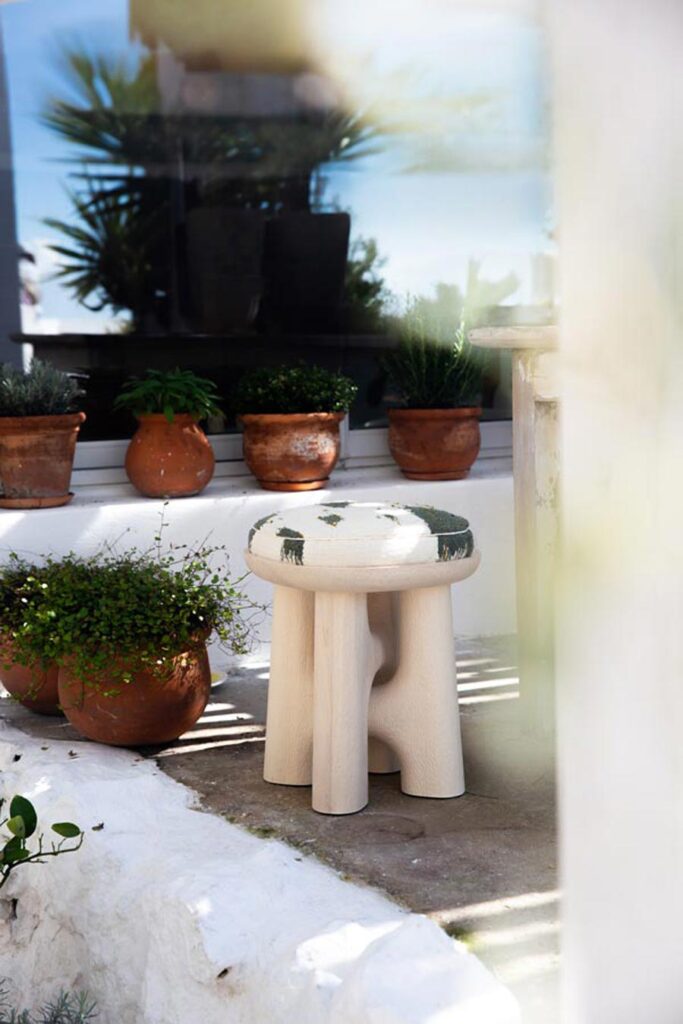
Many artists today are exploring three-dimensional forms: sculptures, objects or textile furniture. Objects that can be walked around bring a different message to a project or space.
These pieces blur the boundaries between disciplines. A wool stool, for example, can be all of the following at once:
- A functional object
- A sculpture
- A symbolic work
This hybridisation is of particular interest to gallery owners and collectors. It allows art to be introduced into the domestic space in a subtle way.
Some interior designers are becoming increasingly interested in the work of craftspeople, putting their expertise to use in creating unique interiors.
Conclusion
Contemporary textile art is currently experiencing a real renaissance – finally, dare we say it! At the crossroads of art, craftsmanship and design, but also a form of poetry, it offers a sensitive and material approach to creation.
For interior designers, gallery owners and collectors, it represents a unique opportunity: that of introducing a living work of art into spaces, made of fibres, gestures and stories. These objects will stand the test of time, just as the Bayeux Tapestry did before them.
More than just a decorative object, textile art ‘connects’ people to each other and to themselves, with greater meaning and respect. It thus becomes an artistic language capable of transforming our relationship with space and matter.
Laisser un commentaire